

Date Palm Nutrients
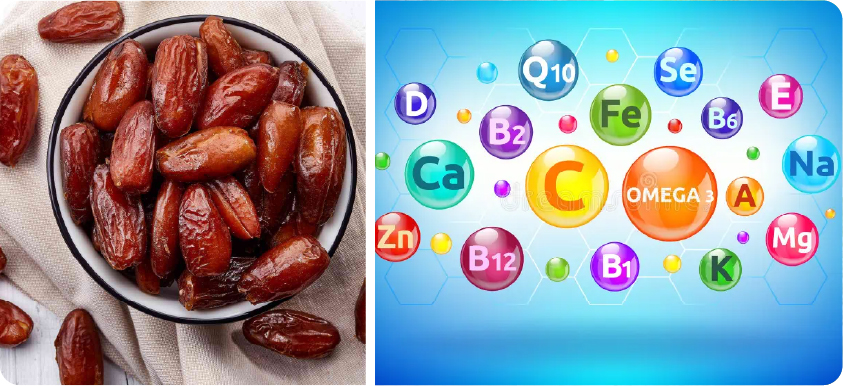
Dates, especially ripe or dried varieties such as Medjool and Deglet Noor, are nutrient-dense. As much of their water evaporates during ripening, their nutrients become concentrated. A 100-gram serving (about four to five dates) provides the following:
- Calories (277 kcal) and quick energy: Dates provide substantial energy, mainly from natural sugars such as fructose and glucose, which the body absorbs quickly. They can be a convenient snack before or after exercise and are popular for breaking a fast.
- Carbohydrates (75 g) and glycemic index (GI): Although dates are high in sugar and carbohydrates, they have a low-to-moderate glycemic index. This means they release sugar into the bloodstream more gradually than refined sugar.
- Dietary fiber (7 g): Seven grams per 100 grams is nearly 30% of an adult's daily requirement. Fiber supports digestive balance, helps prevent constipation, and nourishes beneficial gut bacteria. It also slows sugar absorption into the bloodstream.
- Potassium (20% of the daily requirement): By equal weight, dates contain more potassium than bananas. Potassium helps regulate heart rhythm and blood pressure, prevent muscle cramps, and maintain fluid balance in the body's cells.
- Magnesium (14% of the daily requirement): Magnesium is involved in more than 300 enzyme reactions in the body. It supports strong bones, helps reduce blood-vessel inflammation, and aids blood-sugar regulation.
- Vitamin B6 (12% of the daily requirement): This vitamin is important for brain and nervous-system development. It helps the body produce neurotransmitters such as serotonin and melatonin, which support mood and restful sleep.
- Other minerals: Dates also contain iron, which helps produce red blood cells; copper, which supports iron absorption and cellular energy production; and calcium, which works with magnesium to support bone health.


