

Date Processing and Value Addition in Agribusiness
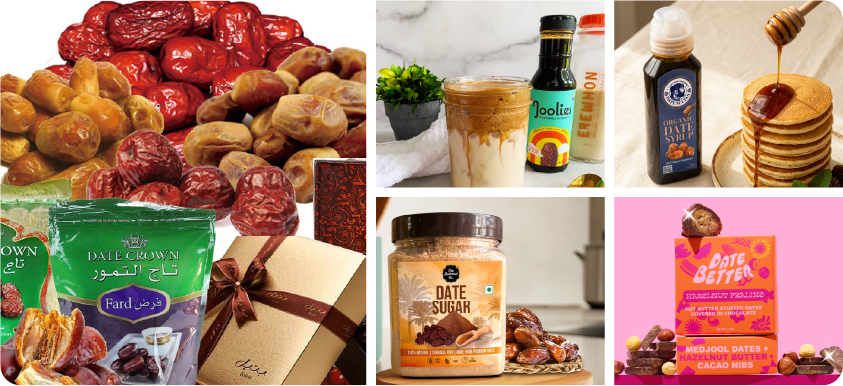
Date processing is a strategic way to transform an ordinary crop into a food and consumer-goods industry with higher-value products. The date palm is considered a "zero-waste crop" because every part—from the fruit and seeds to the leaves, fronds, and trunk—can be used effectively.
1. Food and Beverage Processing
This area has strong market demand and can be highly profitable. Fruit that does not meet appearance standards for fresh or dried sales can be transformed into value-added products:
- Date paste: Dates are pitted, ground, and cooked into a thick paste. It is used in bread, cakes, and energy bars to add sweetness and flavor in place of refined sugar.
- Date syrup or molasses: Made by simmering date flesh with water and straining it. This dark, thick syrup contains iron and potassium and is used on pancakes, in coffee, or in sauces.
- Date powder or date sugar: Dates are dried and finely ground. It can be used in cooking as an alternative to refined sugar while retaining the fruit's fiber.
- Date-seed products: The seeds left after removing the fruit are not waste. They can be cleaned, roasted, and ground into caffeine-free date-seed coffee. Date-seed oil is also used in premium beauty products such as cosmetics and soaps.
- Date snacks and confectionery: Dates can be stuffed with almonds or walnuts and coated in chocolate to create premium gifts and confections.
2. Utility and Handicraft Products
Beyond the fruit, date palms provide abundant raw materials for everyday use and support environmentally friendly practices:
- Date-palm frond crafts: The tough, flexible leaves and fronds have been used in the Middle East for thousands of years. They are made into mats, baskets, trays, hats, and bags. Modern processing can also turn fronds into fully biodegradable food packaging as an alternative to plastic.
- Palm fiber: Strong fibers around the base of the fronds can be woven into durable ropes, brooms, and cleaning brushes.
- Palm trunks: Older, unproductive trunks can be used for rustic furniture and building materials such as posts, beams, and fences, including for attractive agritourism sites.
3. Economic Value of Date-Processing Facilities
Developing a date-processing chain can bring significant economic benefits to orchard owners and local communities:
1. Reduce losses: Dates damaged during harvest no longer need to be discarded; they can be used as raw materials for date paste or syrup.
2. Extend shelf life: Processed products can be stored for months or years, making export easier without the spoilage concerns associated with fresh fruit.
3. Create jobs and support tourism: Processing facilities and date-palm craft centers can attract visitors who tour and buy products locally, while creating jobs in the surrounding community.
An integrated date-processing plan opens new opportunities in agribusiness, supporting environmental sustainability and creating more reliable income streams.


